April 15, 2026
An article on the further use of experience gained from the Project for coordinated management of ODS and POPs disposal has been added to the 'Success Stories' section. Read more >>





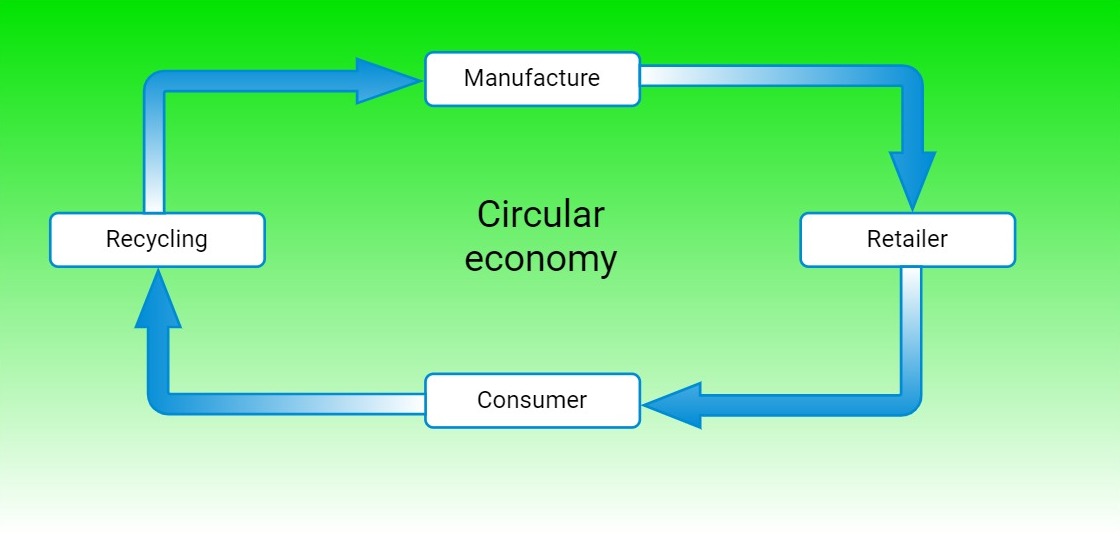
This section summarizes the principles of the circular economy and demonstrates how the GEF-UNIDO Project contributes to using natural resources in a sustainable way, decontaminating hazardous substances, recovering recyclable materials for further use, and reducing the area of landfills. Read more
The project creates conditions and opportunities for efficient and environmentally sound destruction of ozone-depleting substances (ODS) and persistent organic pollutants (POP) in Armenia, Belarus, Kazakhstan, and Ukraine. The project will support these countries in fulfilling their commitments under the Montreal Protocol and Stockholm Convention. Read more
The Montreal Protocol on Substances that Deplete the Ozone Layer is an international treaty, signed on September 16, 1987, in Montreal, Canada. The agreement provides for phase-out of production and consumption of ozone-depleting substances, some of which have been widely used as refrigerants and foaming agents in refrigerators and heat insulation. With the last amendment, the Kigali Amendment, a schedule of phase-out for fluorinated greenhouse gases also used as refrigerants was set. Read more
The Stockholm Convention on Persistent Organic Pollutants is an international environmental treaty, signed in 2001 and effective from May 2004. The document aims to eliminate or restrict the production and use of the most hazardous POPs. As of September 2018, 184 parties — EU and 183 countries — ratified the convention. Read more
This section tells how the participating countries—Belarus, Ukraine, Armenia, and Kazakhstan—control the management of hazardous waste, including ODS- and POP-containing one, at the national level, and offers a detailed list of relevant laws, regulations, bylaws, etc.Read more
The project for coordinated management of ODS and POP disposal in Ukraine, Belarus, Kazakhstan, and Armenia is implemented as scheduled.