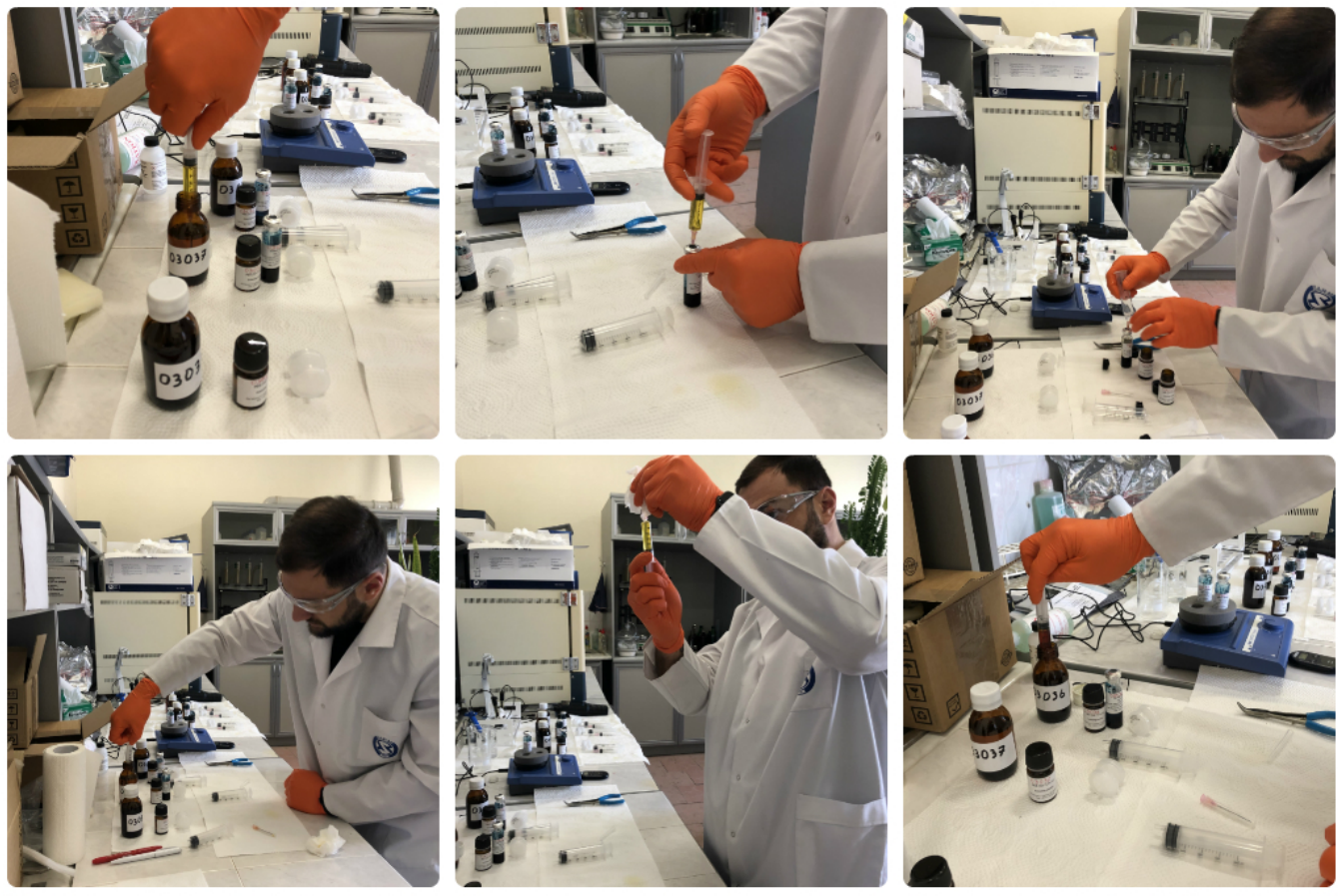
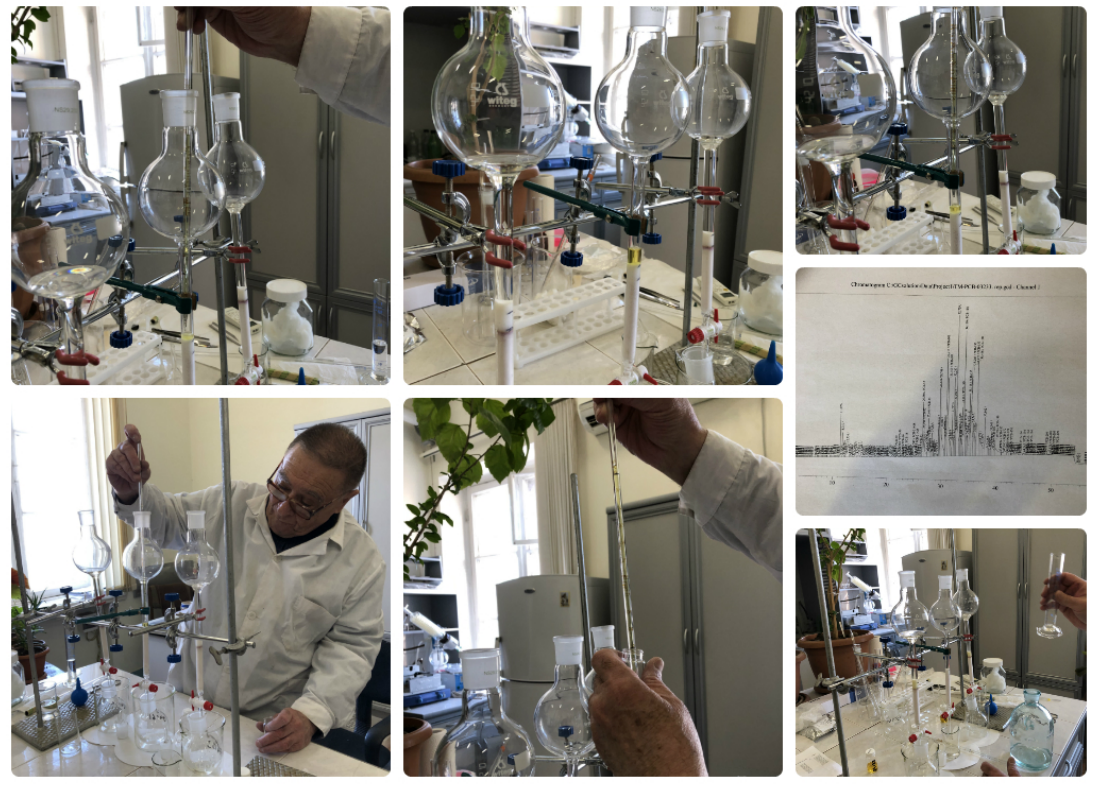
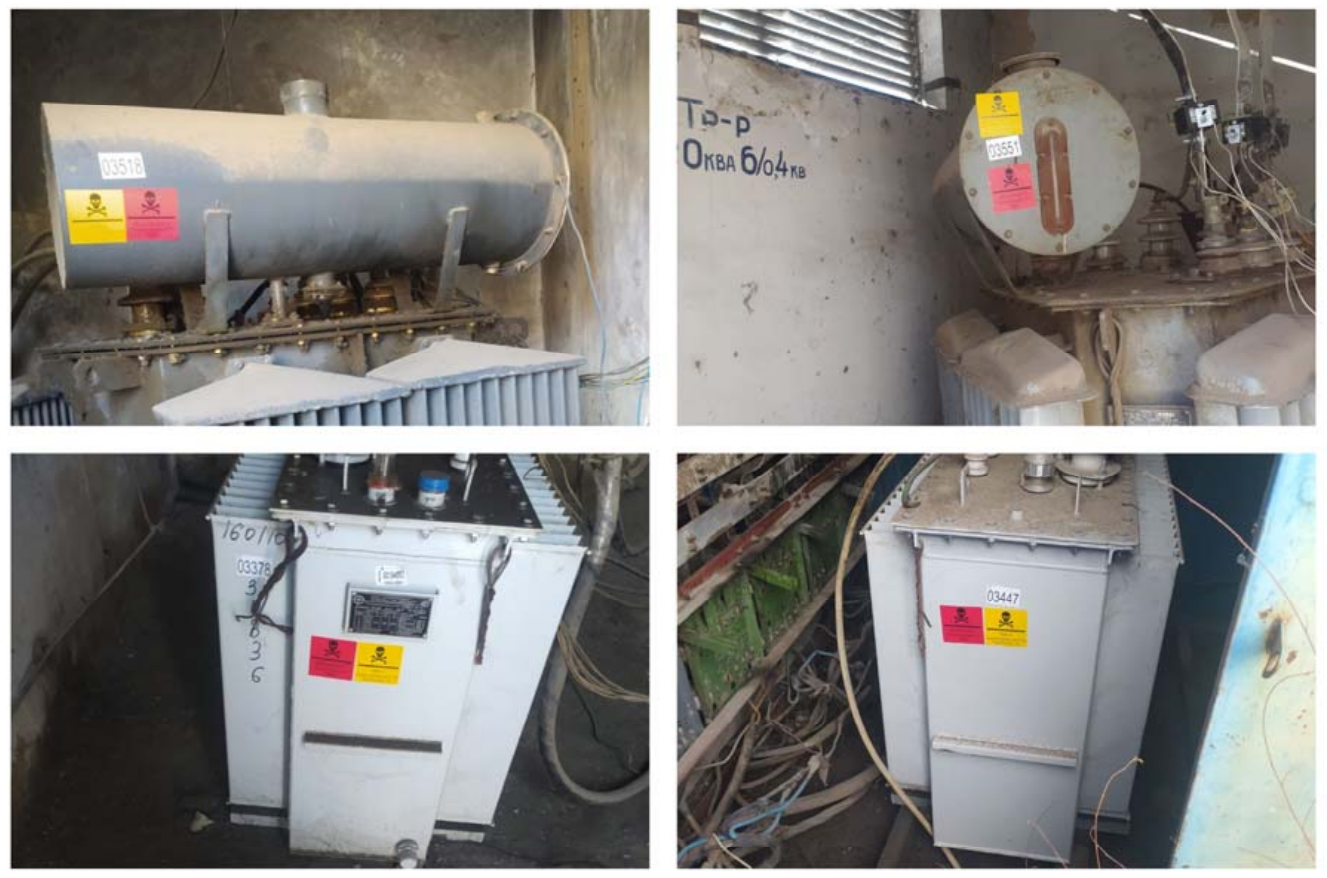
Identification, Inventory, Sampling, and Labelling of Equipment Containing PCBs in Armenia
On 17 May 2021, a final workshop dedicated to the participation of the Republic of Armenia in the Regional Demonstration Project for Coordinated Management of ODS and POPs Disposal was held in Yerevan. During the event, the components, objectives, and outcomes of the project implementation in the country were presented.
The Regional Demonstration Project for Coordinated Management of ODS and POPs Disposal in Ukraine, Belarus, Kazakhstan and Armenia aims to demonstrate environmentally sound collection and destruction of Persistent Organic Pollutants (POPs) stocks and Ozone Depleting Substances (ODS). This demonstration project assists the participating countries involved in fulfilling their obligations under the Stockholm Convention and the Montreal Protocol. The project aims to improve regulation and strengthen national capacity to identify, assess, manage and treat such waste in an environmentally sustainable manner. The policies and regulations developed during the project are intended to maximize opportunities for public-private partnerships.
The Republic of Armenia participated in the project solely under the polychlorinated biphenyls (PCBs) component, in line with the Stockholm Convention.
During the project, 2,000 samples of oils containing polychlorinated biphenyls were identified, sampled, and labelled to determine the appropriate method of their subsequent neutralisation or destruction.
Sampling and Inventory
It was found out that over 99% of the equipment and oils potentially contaminated with PCBs are owned by one of the project’s main stakeholders, namely the “Electrical Networks of Armenia” CJSC (“ENA” CJSC). It was decided to allocate 2000 samples to be taken as follows:
- 90% – “ENA” CJSC
- 10% – “Gazprom Armenia” CJSC, “Yerevan TPP” CJSC, “International Energy Corporation” (IEC) CJSC, “BEC” CJSC, “Hrazdan Thermal Power Plant (Hrazdan TPP) OJSC.
Following consultations consultation with the management of the ENA CJSC, the allocation of the 1,800 samples assigned to ENA CJSC was agreed as follows:
- Yerevan – 40% (720 samples)
- Gyumri /Shirak Marz – 20% (360 samples)
- Vanadzor /Lori Marz – 20% (360 samples)
- Etchmiatsin / Armavir Marz – 10% (180 samples)
- Jermuk / Vayots Dzor Marz – 10% (180 samples).
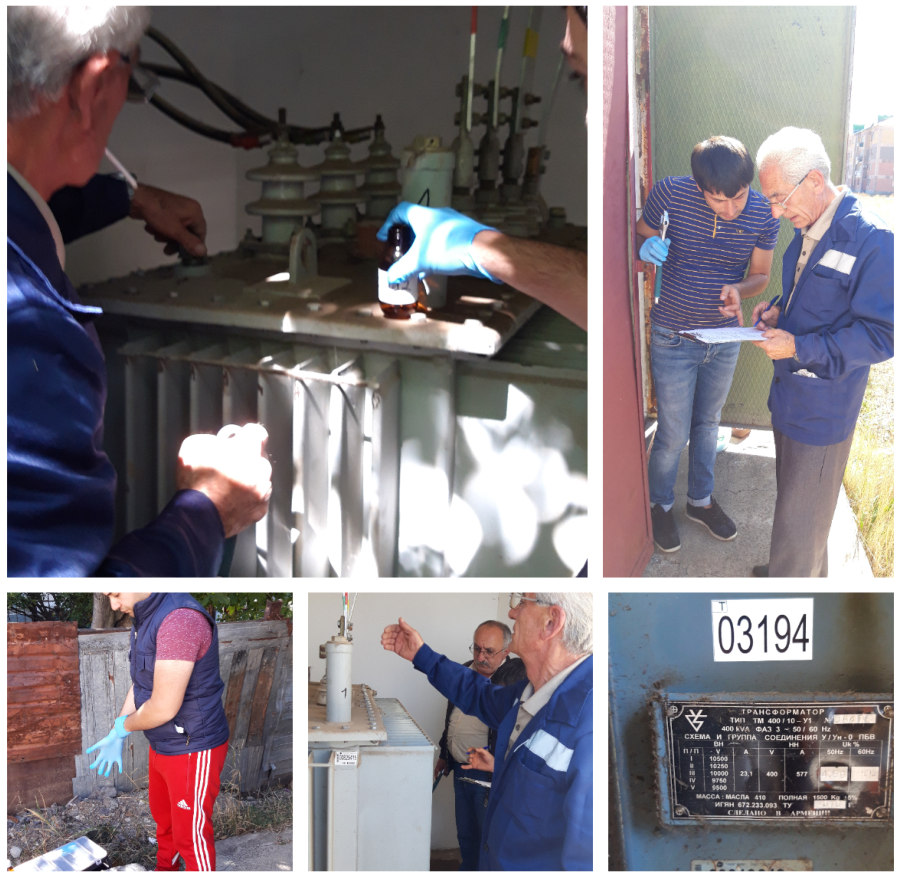
Once the inventory, sampling and the first stage labelling of the 2,000 pieces of equipment had been completed, the oil samples have been transported to the Environmental Monitoring and Information Center (EMIC) laboratory. In total 2,032 oil samples were taken during the reporting period, including 32 pieces of equipment that were re-sampled for quality control purposes.
Screening of the field samples with the help of Analyser
Screening was performed using Sea Marconi Total Chlorine and PCBs Screening Device (SM-TCPs) with appropriate SM-TCPs – Potentiometric Test Kit.
Screening was completed by 25 December 2020. The results are summarised in the table below:
| Number of samples | Information |
|---|---|
| 2032 | Sampled |
| 2000 | Screened |
| 1433 | 50 ppm |
| 535 | ≥50 ppm |
| 483 | 50 – 500 ppm |
| 36 | 500 – 2000 ppm |
| 16 | >2000 ppm |